Why Growing Brokerages Eventually Hit the Same Operational Ceiling
What is an Operational Ceiling?
The Four Signs You’ve Hit an Operational Ceiling
Great brokers end up doing two jobs.
Technology alone isn’t the answer. Operational design is.
Every growing brokerage reaches a tipping point, because their operations can no longer keep up with their growth.
Every successful insurance brokerage reaches a point where working harder simply isn’t enough. At first, everything feels manageable. You know every client personally. Everyone in the office understands how the work gets done. If someone needs an update, they ask across the room. If something is urgent, everyone rallies together to pull it off.
It works because the business is small enough for knowledge to live inside people’s heads. Then your brokerage starts to grow. This looks like more clients, more policies, more renewals, new staff, stricter compliance and a greater need for clear communication.
Ironically, success introduces complexity, and with complexity comes more operational problems. The very business you’ve worked so hard to build starts demanding more coordination and oversight than ever before. And that’s when many brokerages hit what we call an Operational Ceiling.
What is an Operational Ceiling?
An Operational Ceiling isn’t a revenue target, and it isn’t a staff number. It’s the point where your business growth begins to outpace your operational consistency.
You have great people on your team and they deliver excellent service, but suddenly it feels harder to keep the momentum going. This might look like:
– Managers spending more time chasing updates from their team
– Senior brokers become the “go-to” person for everything.
– Administration tasks start to increase faster than revenue.
Everyone is busy, yet nobody feels in control. Sound familiar?

The Four Signs You’ve Hit an Operational Ceiling
Over the years, we’ve noticed the same four warning signs appearing in growing brokerages.
#1. Your best broker has become your workflow
Every brokerage has one: the person who remembers everything. They know where every renewal sits, which clients still need chasing and which insurer prefers a phone call versus an email. They are excellent at what they do, because they know every detail, inside-out. Whereas everyone else on the team has forgotten the tiny details. It makes your best brokers an invaluable team member, but it also lays an unnecessary and heavy burden on them.
For sustainable and consistent growth to occur, you need to aim for operational excellency. For operational excellence to occur, your best broker shouldn’t be the system holding it all together. Not only is it likely to end in burnout for your best broker, but the overall growth of your brokerage will start to slow. If your best broker is out of the office or on leave and things hit a stand still, then you know that you’ve built knowledge inside your people, instead of relying on the system to support them.
#2. Everyone gets the job done… differently
If you ask five brokers how they manage a renewal, you’ll often get five different answers. None of them are necessarily wrong, in fact, they may all produce excellent outcomes. The problem however, is the lack of consistency across the entire system.
When every person follows a slightly different path, it’s difficult to measure performance, train new staff, maintain compliance and identify opportunities for improvement. Consistency across a brokerage isn’t about controlling people, it’s about removing unnecessary variation, for better, more streamlined operations, to allow your brokerage to grow.
#3. Managers ask people instead of dashboards
One question tells us a lot about a brokerage’s operational maturity. When a manager wants to know what’s happening with renewals, do they ask someone? Or do they already know because the system tells them?
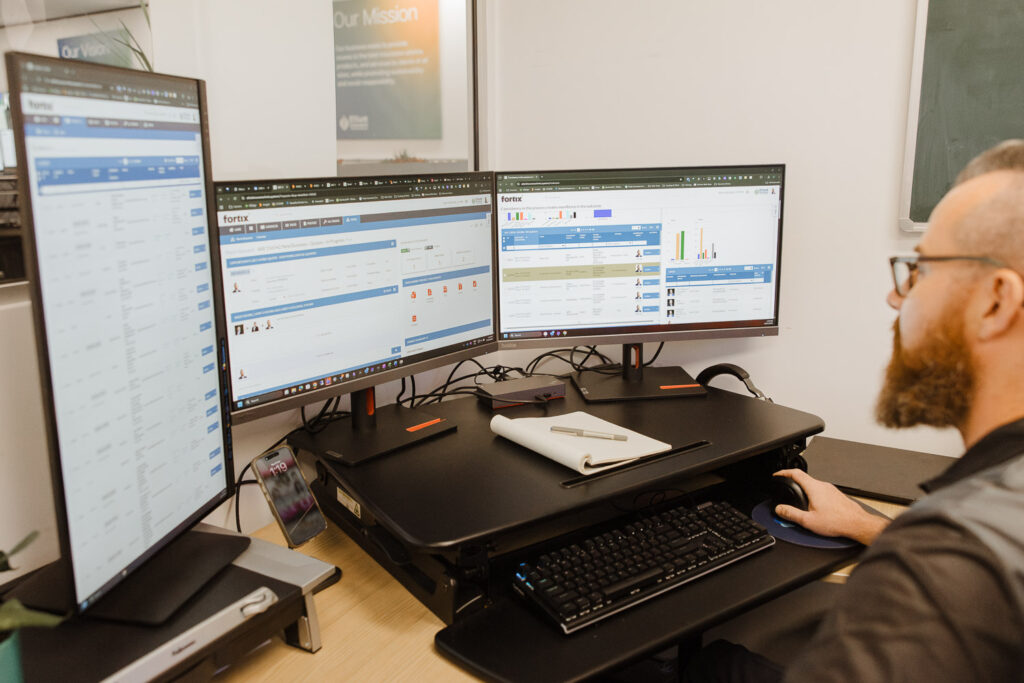
If visibility depends on one-to-one conversations, meetings or checking multiple spreadsheets, the business is relying on people to create information, instead of allowing the work itself, to create visibility.
This is a subtle but important difference.
#4. Hiring more people creates more coordination
In theory, growth should create more capacity for your team, but in reality, it adds complexity and requires more coordination. Every additional person (staff or client), creates:
More communication.
More handovers.
More checking.
More meetings.
More administration.
Eventually, adding staff to your already busy brokerage won’t reduce the daily stress and pressure of running the business. Without clear systems, every new person simply creates more coordination and work for everyone else.
When adding more staff starts to feel like a burden, this is usually the clearest sign that the business has reached its operational ceiling.

Great brokers end up doing two jobs.
One of the most insightful comments we heard recently on our Future of Broking Webinar, was from industry leader, Daniel Webber; and the idea was simple,“It felt like we were doing two jobs.”
The first one, was the job they loved: Advising clients, managing risk, negotiating with insurers and building relationships.
The second one, was organising the work: Searching emails, following up documents, checking spreadsheets, remembering outstanding tasks and making sure everyone else knew what was happening.
The result of hitting an Operational Ceiling is that none of those activities improve client outcomes or your bottom line. They’re simply the hidden cost of disconnected operations.
Technology alone isn’t the answer. Operational design is.
So, what do you do when your brokerage reaches its Operational Ceiling?
It might sound strange coming from a technology company, but buying another piece of software rarely fixes operational problems.
Technology amplifies whatever already exists. If your processes are inconsistent, technology scales inconsistency and your information is scattered, automation spreads confusion faster.
The brokerages seeing the greatest results aren’t necessarily buying more software.
They’re deliberately designing better ways of working, then using technology to make those processes consistent, visible and repeatable. That’s the difference between a brokerage that continues to grow and one that constantly feels like it’s fighting its own operations.
The ones that break through it don’t simply work harder or hire more people. They redesign how work flows through the business.
Ready to Explore What’s Possible?
At Fortix, we work with insurance brokerages to improve workflow visibility, streamline operations, and reduce administrative burden through smarter systems and automation.
If you’re feeling the pressure of renewals, compliance, and growing workloads, we’d love to have a conversation. Book a CRM & Workflow Assessment and discover where the biggest opportunities exist inside your brokerage.
Talk to our systems specialist